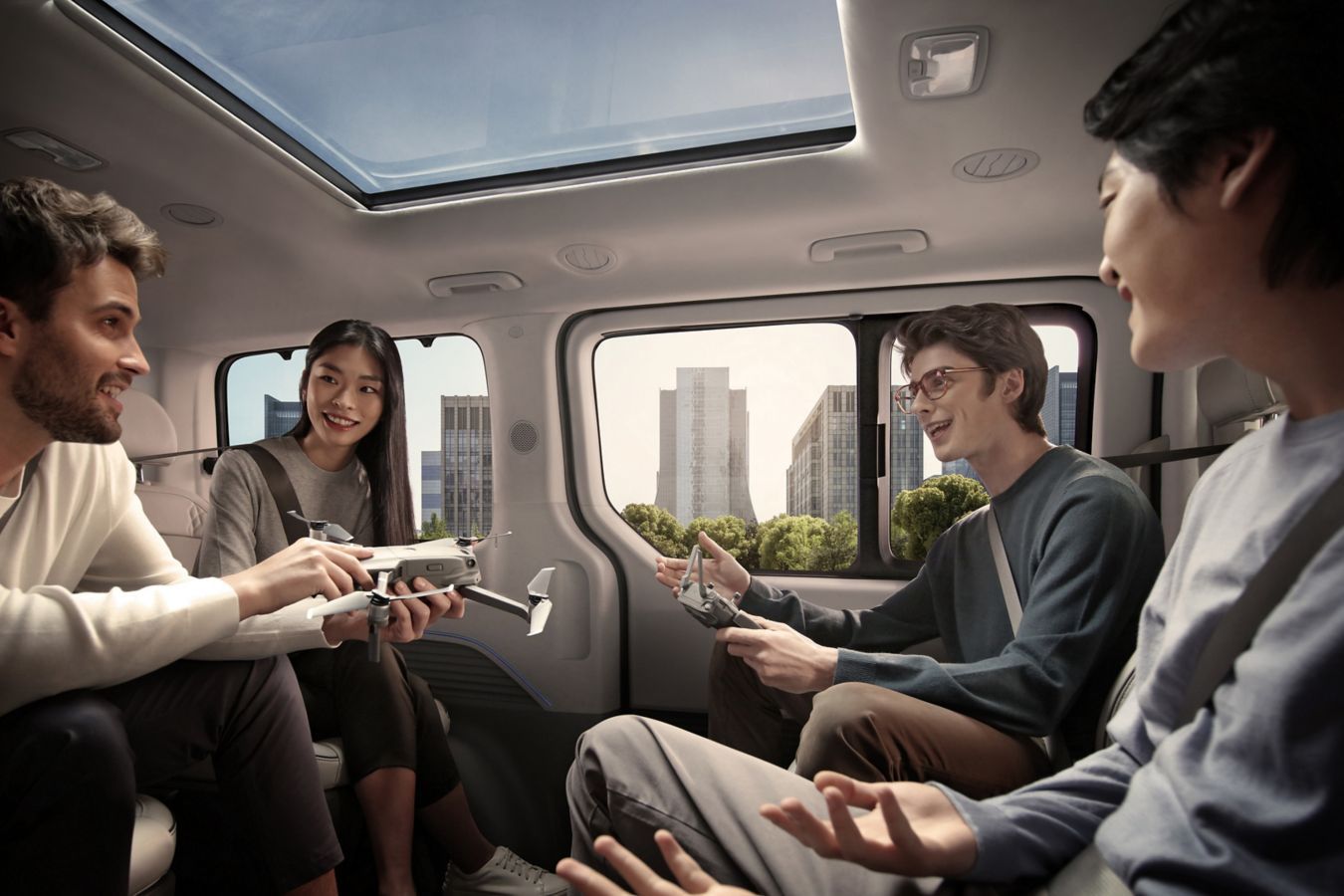
What stands out: Staria combines van-like interior space with a passenger-car-style cabin and technology. Depending on market, Hyundai offers passenger, Premium/Luxury, cargo, gasoline, diesel, hybrid and now electric versions. Do not assume one country's engine, seating or equipment applies to another.
What is the Hyundai Staria?
Staria is Hyundai's large MPV and van family. It was designed around interior space rather than the proportions of a conventional SUV. The basic body is roughly 5.25 metres long with a wheelbase of about 3.27 metres, giving Hyundai substantial room for multiple rows of seats or cargo. Hyundai's global materials distinguish passenger Wagon, higher-end Premium and commercial Van versions.
Size and dimensions
| Dimension | Representative Staria figure | Why it matters |
|---|---|---|
| Length | About 5,253–5,255 mm | A genuinely large vehicle; parking space and garage length matter. |
| Width | About 1,995–1,997 mm | Wide cabin, but tighter urban parking can require care. |
| Height | About 1,990 mm for passenger versions | Excellent headroom; check low car-park limits. |
| Wheelbase | About 3,273–3,275 mm | Helps create the Staria's spacious multi-row cabin. |
Figures above summarize current official Hyundai global/Korean/European material. Small dimensional differences appear between model updates and body variants, so the exact market and trim should be checked before purchase.
How many seats does a Staria have?
There is no single Staria seating capacity worldwide. Hyundai has sold the model in configurations including 7-seat premium versions, 9-seat passenger versions, 10-seat and other market-specific layouts, plus 2- and 3-seat cargo variants. This is one reason CarGlossary will keep local-market reviews separate from this global vehicle page.
Engines, hybrid and electric versions
Staria's powertrain story is broader than a single engine. Hyundai's global combustion-model information lists a 3.5-litre gasoline engine producing up to 272 PS and a 2.2-litre CRDi diesel producing up to 177 PS. Availability depends on country, and some newer markets use different combinations.
Hyundai has also introduced a 1.6-litre turbo-hybrid Staria in Korea. Current Korean specifications list 245 PS system output. This does not mean the hybrid is available in every export market.
Staria Electric
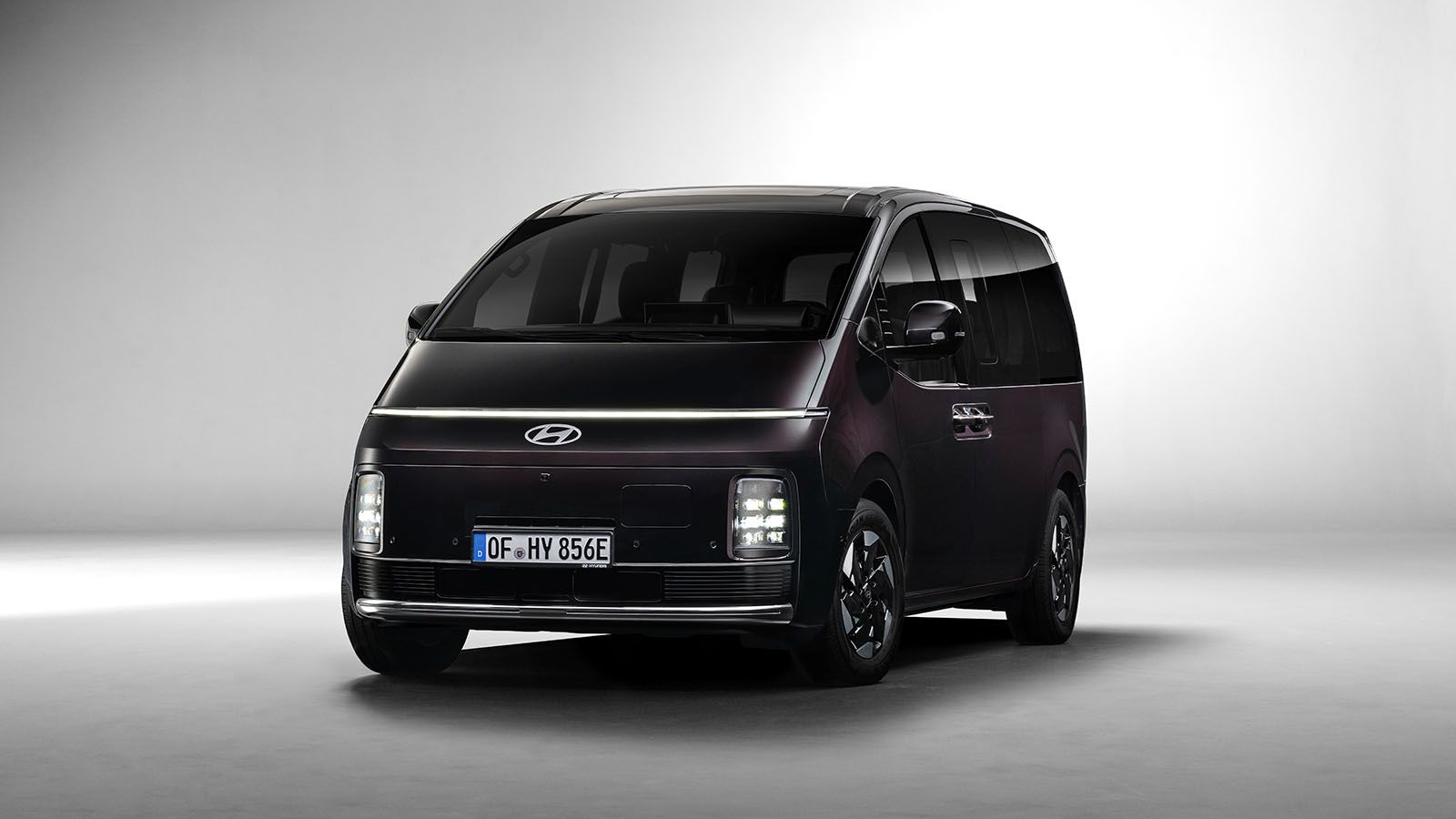
The newest major addition is the Staria Electric. Hyundai's European specification lists an 84 kWh lithium-ion battery, 160 kW (218 PS) front motor and 350 Nm of torque. Hyundai says the model uses an 800V electrical architecture, supports DC charging from 10–80% in about 20 minutes under suitable conditions, and offers Vehicle-to-Load (V2L). Hyundai's launch material estimated up to 400 km WLTP range, subject to final homologation and market specification.
Key Staria features
- Sliding side doors: useful when loading passengers in tighter spaces.
- Large glass area: one of Staria's defining design features and helpful for outward visibility.
- Long wheelbase: prioritizes cabin space across multiple rows.
- Shift-by-wire on applicable versions: electronic gear selection instead of a conventional mechanical linkage.
- HTRAC AWD on selected versions/markets: not universal across the range.
- Drive modes and convenience technology: equipment varies considerably by grade and country.
- Electric-specific technology: the Staria Electric adds 800V charging architecture and V2L capability.
Safety and driver assistance
Hyundai offers Staria with a range of SmartSense driver-assistance technologies, but the exact package varies by trim and market. Buyers should verify features such as forward collision assistance, lane functions, blind-spot systems, parking assistance and adaptive cruise control against the local specification sheet rather than relying on a global equipment list.
Practicality: where Staria makes sense
Staria is most compelling when interior volume, easy passenger access or flexible seating matters more than compact exterior dimensions. It can suit large families, hotel and airport transport, executive shuttle use and businesses needing a passenger/cargo platform. The trade-off is straightforward: at roughly 5.25 m long and almost 2 m wide and high, it is a large vehicle for crowded city parking.
Things to check before buying
- Exact seat count and whether the seats slide, fold or recline as you need.
- Local engine or electric version — global specifications should not be used as a substitute.
- Vehicle height if you regularly use underground parking.
- ADAS features included on the exact trim.
- Second- and third-row comfort versus the amount of luggage space you need.
- For Staria Electric, local launch timing, homologated range, charging network compatibility and price.
Similar cars and upcoming comparisons
The most useful alternatives depend on market. The planned comparison sequence is Hyundai Staria vs Kia Carnival, followed by Staria vs GAC M8 and Staria vs Maxus G90. These pages will compare verified local-market prices, seating, dimensions, engines, technology and practicality rather than declaring one universal winner.
Related CarGlossary terms
Primary sources
- Hyundai Worldwide — Staria performance and combustion powertrains
- Hyundai Motor Company — Staria launch, dimensions and packaging
- Hyundai Motor Company — Staria Electric launch and specifications
- Hyundai Motor Europe — Staria Electric technical data
- Hyundai Korea — current Staria Hybrid specifications
CarGlossary separates global model information from local-market buying data. Staria specifications can differ materially by country, model year, body style and trim. Market-specific reviews can be published separately when current local specifications, availability and pricing are verified.