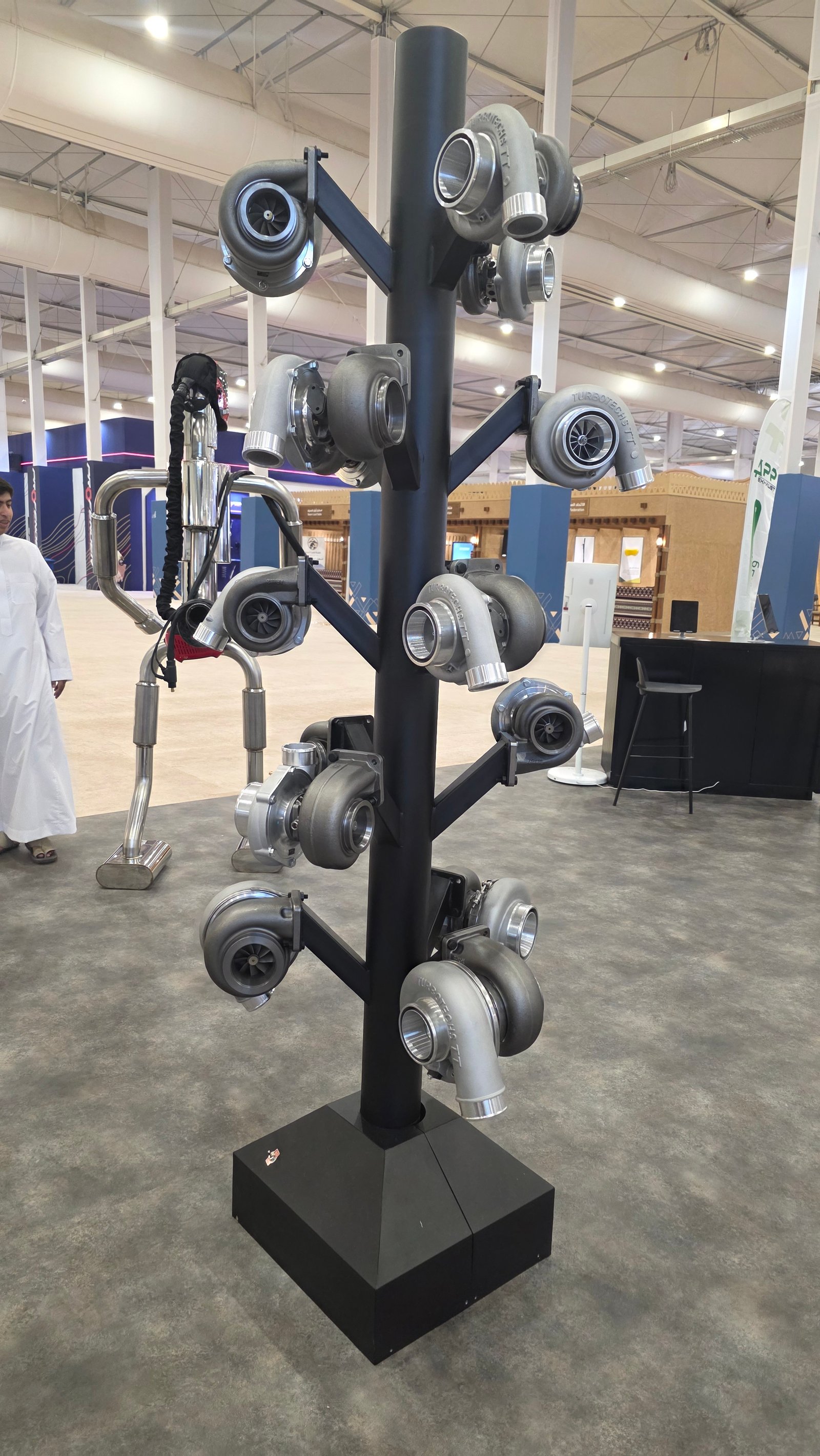
A turbocharger is an exhaust-driven air compressor that increases the mass of air entering an engine so the engine can produce more power.
Turbine side vs compressor side
The hot turbine side receives exhaust gas. Exhaust energy spins the turbine wheel and shaft. The shaft turns the compressor wheel on the cold side, which draws in ambient air and compresses it before the air reaches the engine.
Why an intercooler is used
Compressing air raises its temperature. A charge-air cooler, commonly called an intercooler, removes heat from the compressed air, increasing density and helping control combustion temperature and knock risk.
What does a wastegate do?
A wastegate controls boost by bypassing some exhaust flow around the turbine. Reducing turbine energy limits turbo speed and the boost pressure produced by the compressor.
What is turbo lag?
Turbo lag is the delay between requesting more engine torque and the turbocharger building the required airflow and boost. Turbo sizing, turbine design, exhaust energy, gear selection and variable-geometry or multi-turbo strategies all affect response.
Single, twin and variable-geometry turbos
Engines can use one turbo, two turbos arranged in parallel or sequentially, or variable turbine geometry that changes effective turbine flow area. The best solution depends on engine size, desired torque curve, emissions and packaging.