A transfer case is the drivetrain unit that routes transmission output to both axles in a four-wheel-drive vehicle; many off-road units also include high and low ranges.
How a transfer case works
The transmission multiplies and selects engine torque, then the transfer case determines how that output is sent to the front and rear axles. In a part-time 4WD system it may connect the front axle only when the driver selects four-wheel drive; in a permanent-4WD system it may work with a centre differential.
What does low range do?
A low-range gear adds another reduction ratio after the main transmission. That lets the wheels turn more slowly for a given engine speed while multiplying torque. See low range explained.
Transfer case vs differential
A differential allows two outputs to rotate at different speeds. A transfer case distributes drive between axles. Some transfer cases contain a centre differential, so the terms can overlap in one assembly without meaning the same thing.
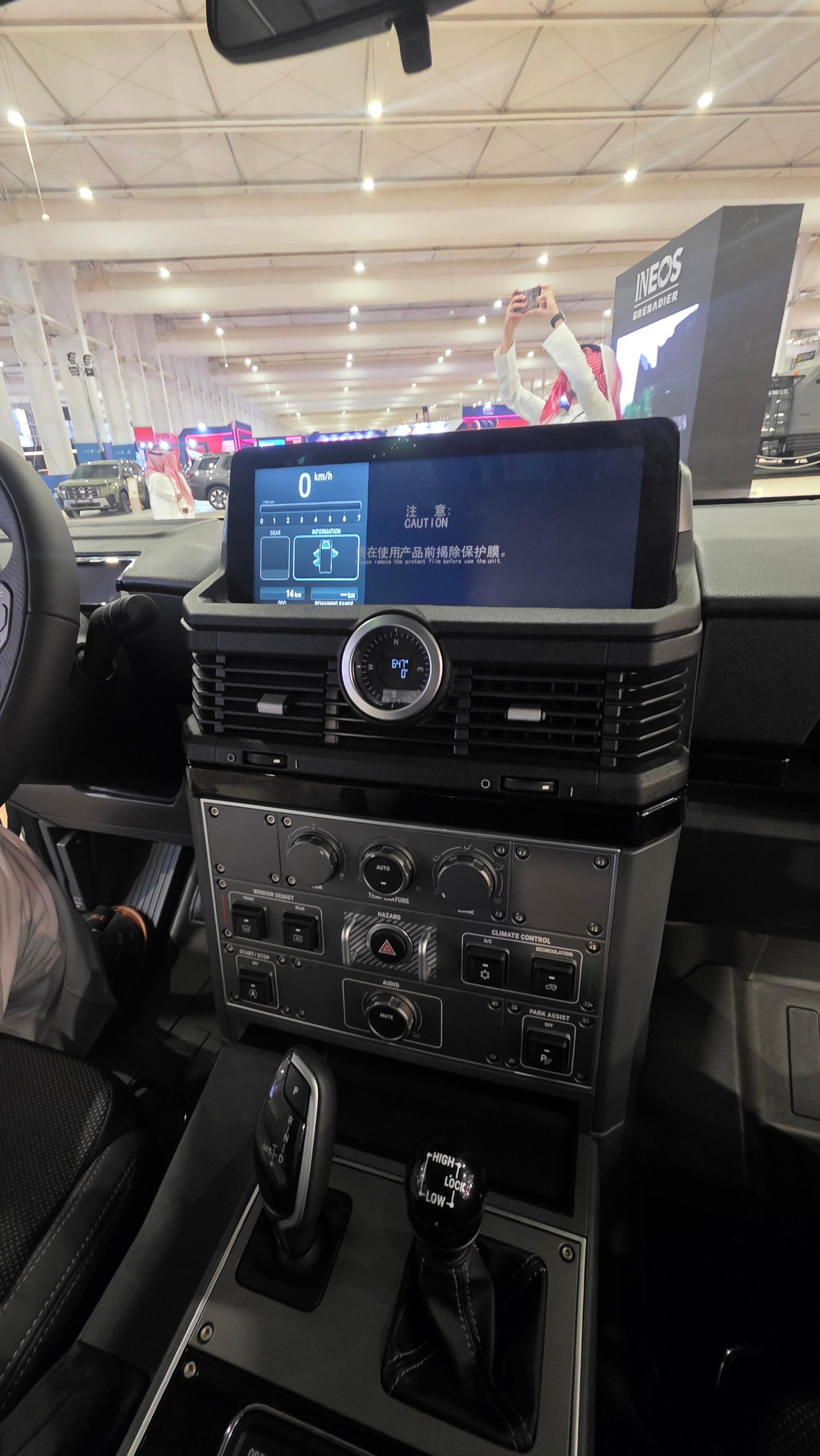
Real example: INEOS Grenadier
INEOS lists a manually operated, Tremec-built two-speed transfer case as standard on the Grenadier and Quartermaster. Our original photo shows the physical selector used to engage its off-road range.